When children learn language, they aren’t just learning words — they’re learning who they are and how they relate to the world. One key part of speech and language development is self-recognition in communication. This includes understanding pronouns, using their own name appropriately, and being able to talk about themselves and others.
Building Identity Through Language
Using pronouns like I, me, you, he, and she is an important milestone. Some children need support to:
- Understand who “I” refers to versus “you”
- Switch between their name and pronouns
- Use he and she correctly
During therapy sessions, we teach these skills gently and consistently. When a child mixes these words up, the therapist pauses the activity and invites them to think about who they’re talking about. With encouragement and positive reinforcement, children start recognizing errors and correcting themselves.
Short stories, picture scenes, and play activities help children practice these skills in natural situations. Over time, they begin to reflect on themselves, others, and their relationships—a crucial part of language development.
Growing Social-Emotional Understanding
Recognizing yourself also means understanding the feelings and experiences of others. We work on pragmatic language, which includes:
- Reading social cues
- Understanding emotions
- Knowing what to say and how to say it
- Following the unspoken rules of conversation
For example, if we’re looking at a picture of two children at an amusement park — one excited and one nervous — we might ask:
- Why do you think he looks scared?
- What could you say to help him feel better?
- Have you ever felt that way?
These conversations help children build empathy and learn how to respond in social situations. They also strengthen confidence — both in communication and in connecting with others.
Developing Thinking and Reasoning Skills
Language isn’t just about words — it’s also about thinking. We use short stories and everyday scenarios to help children make inferences and think logically.
For example:
If someone takes ice cream out of the freezer and forgets to put it back, what do you think will happen?
Activities like these help children:
- Practice reading comprehension.
- Think about consequences.
- Connect information.
- Build confidence in expressing answers.
As children grow stronger in these areas, they speak up more in sessions and at home, and they become more independent communicators.
The Power of Parent Involvement
Parents play a huge role in language development. When families carry over speech-language strategies at home, children make faster and more lasting progress.
We always take time after sessions to share:
- What we worked on.
- How your child performed.
- Simple strategies to practice at home.
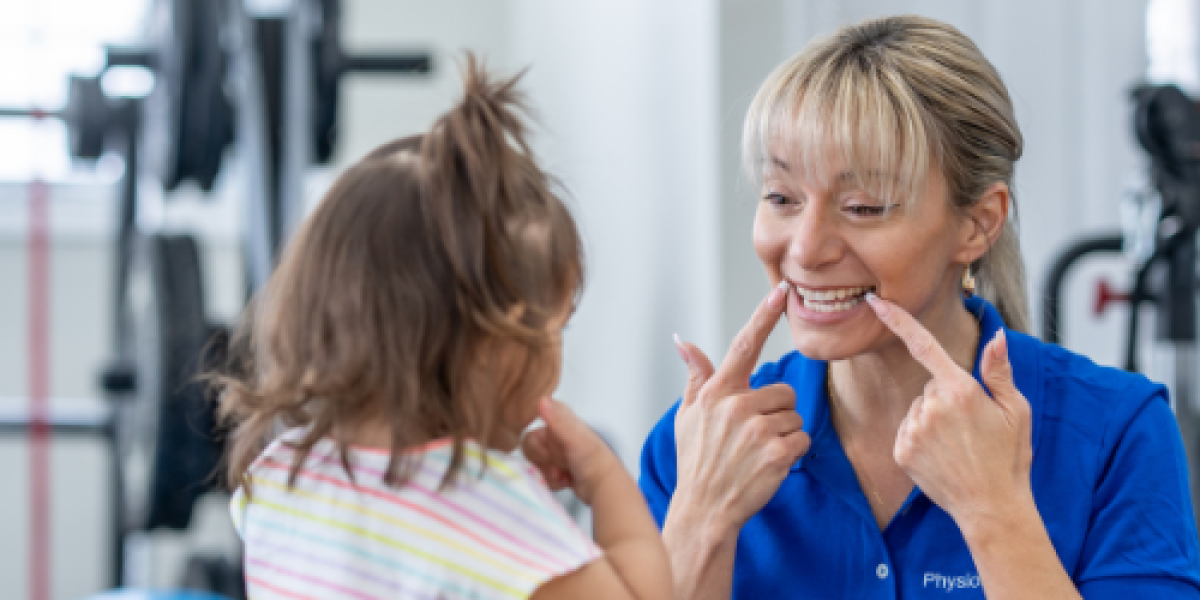
Some parents sit in on sessions, which allows them to see techniques firsthand. For example:
- One therapist coached a parent on practicing L and TH sounds throughout the day, making practice fun and natural.
- Another therapist demonstrated how to help a child use their AAC device, showing which vocabulary is appropriate now and what to introduce later.
This collaboration ensures children get support both in therapy and in their everyday environments.
Every Child’s Voice Matters
Speech therapy is more than correcting sounds — it’s about helping children find their voice, understand themselves, and connect with others. With consistent practice, meaningful activities, and strong partnership between therapists and families, children build communication skills that last a lifetime.
At Steinmetz Speech & Voice, we believe that meaningful progress begins with connection. When a child feels seen, understood, and supported, learning blossoms naturally. Every session is a chance to build confidence, curiosity, and communication — one interaction at a time.